Internet Archive Staffers Are Unionizing
Staffers at the Internet Archive, the non-profit “digital library” that runs the Wayback Machine, have voted to join the Communications Workers of America (CWA). More than 80 of the 124 eligible US staffers voted in favor of unionizing.
The Internet Archive, which also offers free catalogs preserving tens of millions of digital and physical media items, was founded in 1996 by Brewster Kahle, a once-serial tech entrepreneur. Kahle’s mission was to provide “Universal Access to All Knowledge.” Will Howes, an Internet Archive engineer, says that the organizing process has demonstrated how “aligned” employees are in their passion for Kahle’s goals.
“Frankly, we really see the formation of this union as accepting [Kahle’s] challenge to make this workplace the best place it can be in pursuit of a mission, universal access to all knowledge,” Howes tells WIRED.
Howes says that the union is “very optimistic” that Kahle will voluntarily recognize the union and come to the bargaining table.
Kahle did not immediately respond to WIRED’s request for comment.
Microfiche digitization technician Danielle Leard tells WIRED that one of the union’s core goals are securing wage increases and additional benefits, and ensuring that these benefits are consistently available to employees across the company.
“We believe the first and most primary goal of our union is to make sure that the Internet Archive reflects the wants and values of the people that work there, and the people that make the archive,” Leard says.
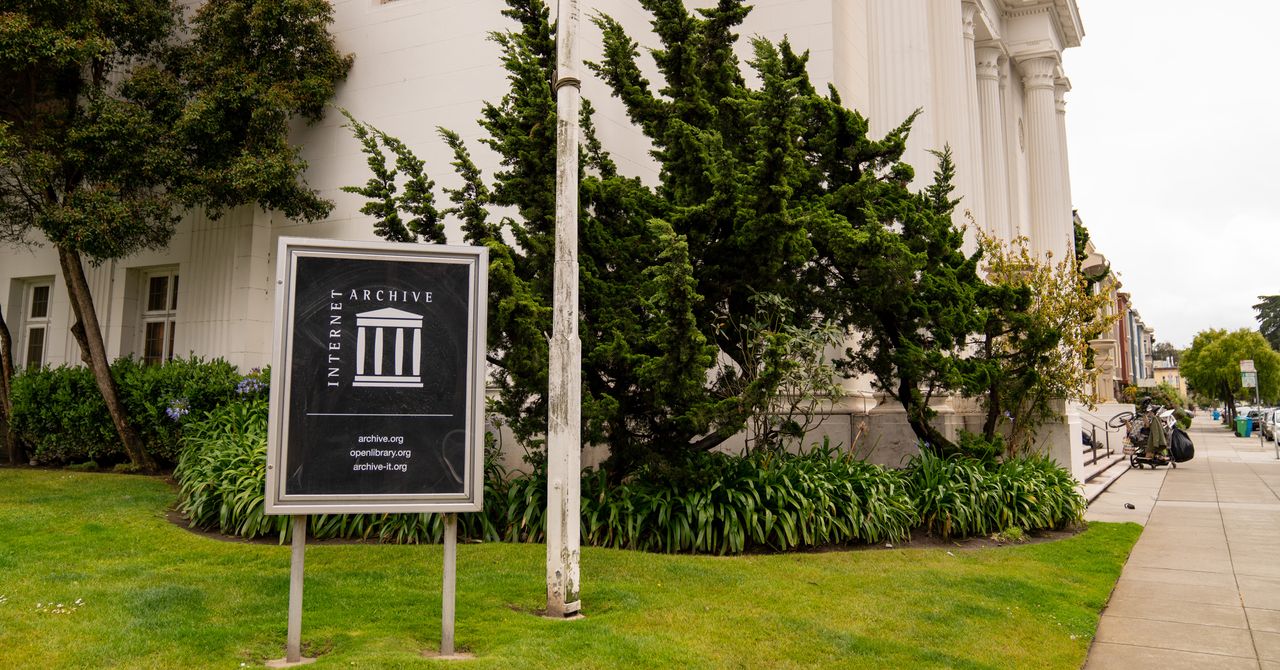
Howes and Leard tell WIRED that the Internet Archive—which claims to have archived more than 1 trillion web pages—employs a highly diverse set of workers, including librarians, engineers, physical media specialists, and facility coordinators who maintain the archive’s building, a former Christian Scientist church in San Francisco. Leard says that the staff’s diversity has made the organizing process, which began in February 2025, “a unique challenge,” but one that’s “really rewarding.”
The vote comes slightly more than two months after staffers at the Wikimedia Foundation, the nonprofit behind Wikipedia, voted to join CWA. Howes says the simultaneous efforts are “very powerful” given that both organizations represent “core infrastructure” of the internet.
Howes says that the union wants to ensure that the 30-year-old project continues to thrive in the long term—and that its workers do too. Leard says this means providing paths for developing skills and getting promoted within the nonprofit.
Leard says that the Internet Archive’s unionization drive is especially important in the present moment, amid waves of tech layoffs and widespread anxiety about “emerging technologies” like AI.
The Internet Archive hasn’t been immune from the consequences of AI. A Nieman Lab report from January found that some news websites, struggling to prevent companies like OpenAI or Anthropic from harvesting their articles, have started blocking web crawlers from the Internet Archive, arguing it gives AI companies a back door to their content. (The archive relies on web crawlers to preserve news articles in near-real time.)
Leard says that ideally, the Internet Archive’s unionization will be “one domino” in a larger process that makes the tech industry better.
“We’re hoping,” they say, “that we’ll continue to be one of the blueprints that will make it easier for other organizations and companies in the future to continue to unionize.”