
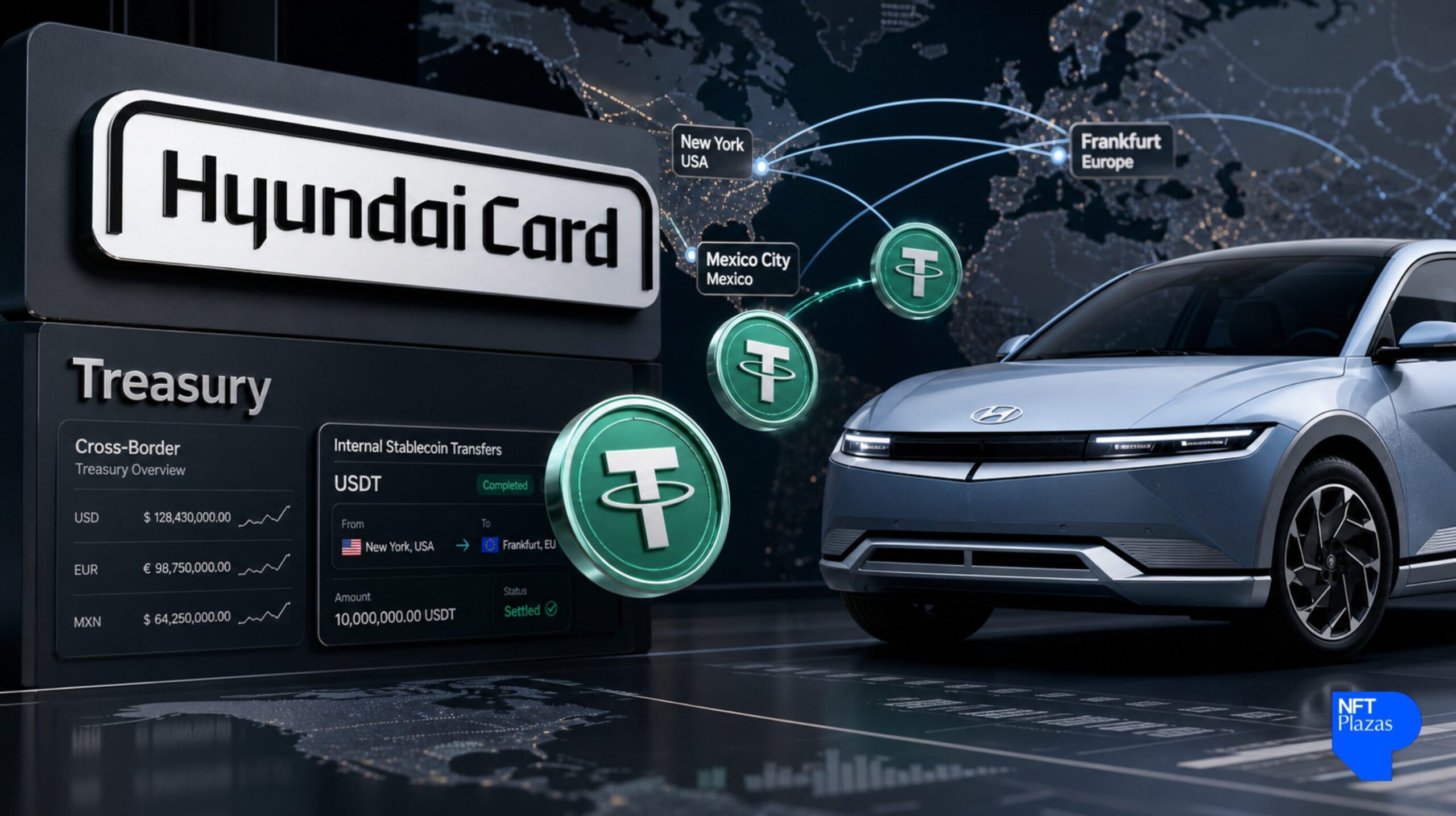
Hyundai Introduces Internal Stablecoin Transfers for Cross-Border Treasury
Hyundai Card and Hyundai Motor have completed a Proof of Concept (PoC) using stablecoins for international transfers between Hyundai Motor entities, according to an announcement from Hyundai Card on July 9. The first test connected entities in the US and Mexico, marking a transition from technical verification to testing the applicability of stablecoins in cross-border treasury. Hyundai Card stated that this model could significantly shorten settlement times compared to traditional bank transfers, before being expanded to a second PoC in Europe.
Stablecoin PoC Reaches Real-World Treasury Test
Hyundai Card described this PoC as preparation for the use of stablecoins in international transfers between Hyundai Motor entities, rather than stopping at technology verification alone. The focus of the test was a specific treasury problem: transfers and reconciliation between units in multiple countries.
According to the official announcement, the PoC was designed around a scenario that could be encountered in real-world operations, in which foreign entities need to process internal payments faster and more transparently.
To serve the test, Hyundai Card stated that they, along with Hyundai Motor, reviewed the legal, tax, accounting, and internal control factors for the relevant entities before executing the transaction. This preparation method shows that the PoC was built as a treasury test with real operational conditions, rather than an isolated blockchain transaction.
Inside the US-Mexico Transfer
The first PoC revolved around a relatively simple transfer flow but included all the necessary steps of a cross-border treasury transaction. Hyundai Motor America converted $20,000 into USDT, sent this stablecoin to Hyundai Motor Mexico, and then the Mexican side converted it back into USD after receiving the funds.
This structure allowed Hyundai to test the entire lifecycle of the transaction, from converting fiat currency to stablecoin, sending it over the blockchain, confirming the transaction, to converting it back to fiat currency at the receiving entity. Avalanche was used as the processing network, Tether participated as the issuer of USDT, and Axiym supported the blockchain payment infrastructure layer.
With a scale of $20,000, this was not yet a test of transaction load or large capital needs. The value of the PoC lay in the fact that it took place between two real foreign entities of Hyundai Motor, thereby testing whether a stablecoin transfer could pass through all the operational steps necessary for internal treasury.
Why Hyundai Is Testing Stablecoin Rails
For a conglomerate with a network of entities across multiple markets, internal transfers are not just payment operations. This is part of cash management: cost allocation, reimbursement, liquidity balancing, and processing accounts receivable and accounts payable between units.
These processes usually go through banks and depend on processing hours, intermediary banks, verification steps, and post-transaction reconciliation. In its announcement, Hyundai Card compared the processing time of the PoC with the traditional bank transfer method, which can take from 3-4 hours or more.
Stablecoins were tested by Hyundai as an additional rail for internal cash flows, not as a crypto product aimed at end-users. This helps position the PoC as a treasury infrastructure test, rather than a marketing move around blockchain or digital assets.
Settlement Speed Becomes the Core Metric
Hyundai Card stated that the entire transfer and verification process in the first PoC took an average of about 7 minutes, compared to the 3-4 hours or longer of the traditional bank transfer method.
For internal transfers between entities, this difference is not just an improvement in speed. Faster settlement can help the treasury team coordinate cash flows more flexibly, reduce the time money sits idle between systems, and shorten post-transaction reconciliation steps.
However, the 7-minute result still needs to be placed within the scope of the first PoC: a $20,000 transaction between two specific entities and on a pre-prepared infrastructure design. To evaluate scalability, subsequent tests will need to further verify transaction volume, transfer frequency, conversion costs, network fees, FX costs, and the capability to handle exception transactions.
Europe Pilot Expands the FX Question
Following the US-Mexico test, Hyundai Card stated that the second PoC would be conducted between Hyundai Motor entities in Europe at the end of the month. Unlike the first PoC, this test will focus on transfers based on local currencies, rather than just revolving around USD.
For transactions across multiple markets, costs incurred during the currency exchange process can directly affect payment efficiency. The European PoC will therefore additionally test FX costs, a variable that was not clearly reflected in the first test.
Hyundai Card stated that Circle and Visa will participate in the second PoC, expanding the group of infrastructure partners after the first test with Tether, Avalanche, and Axiym. This change shows that Hyundai is testing stablecoin transfers in a different configuration, where local currency and conversion costs become a larger focus.
Compliance Work Shapes the Rollout Path
Hyundai Card stated that the PoC was prepared along with Hyundai Motor with a review of legal, tax, accounting, and internal controls of the relevant foreign entities. With cross-border internal transfers, these steps determine whether transactions can be recorded and controlled within the treasury process or just stop at a technical test.
At the corporate scale, stablecoin transfers need to pass through control layers similar to a traditional financial transaction: identifying the sending and receiving entities, checking infrastructure partners, keeping transaction logs, internal approval, and accounting recognition post-settlement. Hyundai Card stated that they will continue to consider the possibility of using stablecoins for payments, transfers, and reconciliation between foreign entities within Hyundai Motor Group, with a focus on whether this model can operate repeatedly across multiple markets.