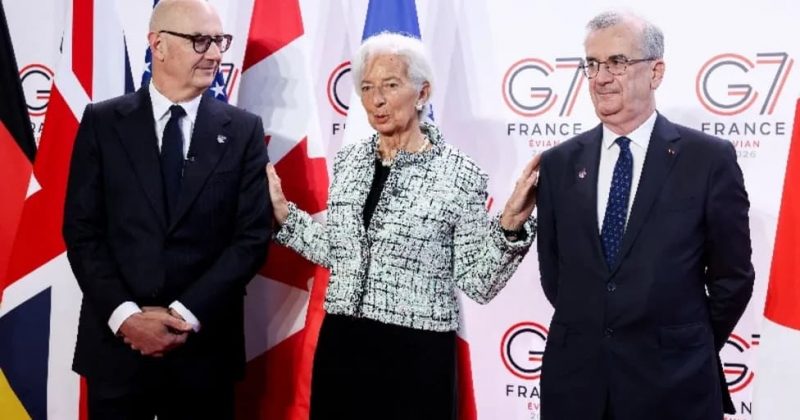
G-7 finance chiefs meet in Paris as debt-market selloff intensifies
The world’s top finance officials are gathering in Paris this week with a familiar problem that’s gotten considerably less familiar in its intensity: bond markets are selling off, and nobody seems quite sure where the floor is.
G-7 finance ministers and central bankers are meeting against a backdrop of rising global bond-market volatility, widening trade friction, and the kind of systemic anxiety that tends to make policymakers reach for the group-chat button. The immediate concern isn’t a single crisis. It’s the convergence of several slow-moving ones.
The core problem: imbalances with nowhere to hide
French Finance Minister Roland Lescure set the tone by framing the discussions around what he called “deep-seated global economic imbalances.” Those imbalances, which span trade deficits, fiscal expansion, and divergent monetary policy paths across major economies, have been building for years. What’s changed is the speed at which they’re manifesting in debt markets.
The concern among ministers isn’t theoretical. It’s that the turbulent unwinding of financial markets Lescure referenced could shift from possibility to reality if coordination falters.
Critical minerals: the other trade war
Beyond the bond-market drama, a significant chunk of the Paris agenda is devoted to critical minerals and rare earths. These are the materials essential for electric vehicles, renewable energy infrastructure, and defense systems. And right now, the supply chain for most of them runs through one country: China.
The G-7’s goal is to reduce that dependence. The policy tools under discussion include price floors designed to protect producers in allied nations, pooled purchasing agreements that would give the bloc more bargaining power, and tariffs aimed at stabilizing markets while encouraging domestic investment in mining and processing.
Price floors are particularly interesting because they address a specific vulnerability. In the past, China has been able to flood markets with cheap rare earths, effectively killing off mining operations in other countries that can’t compete at those price points. A guaranteed floor would theoretically make it viable for Western-aligned producers to invest in new capacity without fearing that a price war will wipe them out before they reach profitability.
What this means for investors
For traditional markets, the Paris meeting matters primarily as a signal of coordination, or lack thereof. Bond investors are watching for any indication that major economies will address fiscal sustainability in a coordinated way.
The critical minerals discussion has direct implications for investors in mining stocks, EV supply chains, and defense contractors. If the G-7 moves toward concrete measures like price floors or pooled purchasing, companies with rare earth assets outside of China could see significant revaluation.
For crypto investors, the connection is less direct. Digital assets weren’t on the formal agenda, and no specific cryptocurrency-related policies appear to be under discussion. Potential impacts are seen through broader market sentiment rather than direct policy. When bond yields spike and risk sentiment sours, correlations between crypto and traditional risk assets tend to tighten, meaning any escalation in bond-market volatility or trade tensions coming out of the G-7 meeting could create headwinds.