
China agrees to purchase $17B of agricultural goods annually from US through 2028
China has committed to buying at least $17 billion worth of US agricultural products every year through 2028, locking in a multi-year purchasing floor that represents one of the more concrete outcomes of recent trade negotiations between the world’s two largest economies.
What the deal actually looks like
The agreement establishes a $17 billion annual minimum for Chinese purchases of American agricultural goods. That covers the usual suspects: soybeans, corn, sorghum, pork, cotton, animal feed, and dairy products.
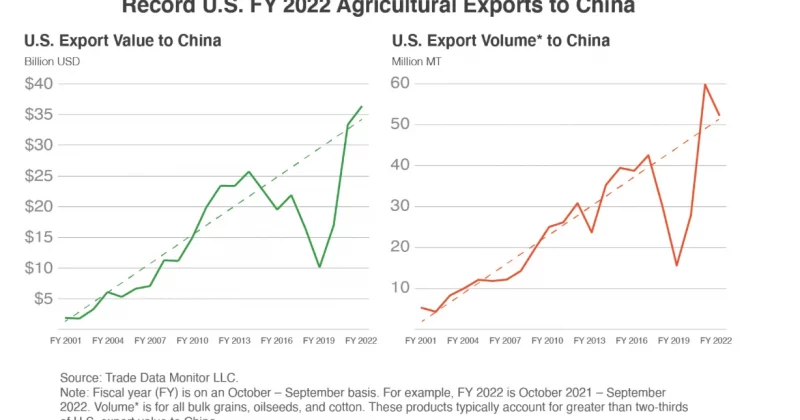
That $17 billion figure sounds impressive in isolation, but it’s actually a significant step down from previous ambitions. The Phase One trade deal, signed in January 2020, set targets closer to $30 billion in annual agricultural purchases. China never came close to hitting those numbers, despite importing substantial quantities of US farm products throughout the period.
The multi-year timeline through 2028 is notable because it extends well beyond typical political cycles in both countries.
The Phase One hangover
The Phase One agreement called for China to ramp up purchases of US goods across multiple categories, with agriculture being a headline component. China was supposed to buy roughly $30 billion annually in US agricultural products, a figure that would have represented a dramatic increase over pre-trade-war levels. Chinese purchases rose meaningfully but consistently fell short of the agreed benchmarks.
Part of the gap was structural. COVID-19 disrupted global supply chains starting in early 2020, right when the deal was supposed to kick in. Part of it was strategic. China accelerated efforts to diversify its agricultural supply chains, turning to Brazil, Argentina, and other producers for soybeans and other commodities where US dominance had once seemed unshakeable.
US farmers received billions in government subsidies to offset the damage from tariffs and unmet purchase commitments. Against that backdrop, a $17 billion annual floor acknowledges the reality that China’s import mix has shifted while still guaranteeing a substantial baseline of demand for American producers.
Why crypto watchers should pay attention, sort of
The agreement contains no tokenized soybeans, no stablecoin settlement rails, and no blockchain-based supply chain tracking. The reporting does not mention any cryptocurrency or tokenized finance structures related to this trade agreement.
US-China trade dynamics have historically correlated with movements in risk markets, affecting digital asset performance. Agricultural commodity prices also play a role in inflation expectations, which in turn influence central bank policy, remaining one of the single biggest drivers of crypto market performance.
The $17 billion commitment is meaningful for the agricultural sector but relatively modest in the context of total US-China trade, which runs into the hundreds of billions annually.