The Lindsay Clancy trial shows the growing power of true-crime TikTok
True-crime fandom no longer wants to watch from the sidelines; it increasingly wants in on the case.
Consider the recent lineup: TikTok helped pull the Menendez brothers back into the national conversation decades after their convictions. Johnny Depp and Amber Heard’s defamation trial became daily social media programming. Luigi Mangione developed an intense internet fandom before his case even reached trial. Increasingly, audiences aren’t satisfied with following a case. They want to investigate it, influence it, and sometimes insert themselves into it.
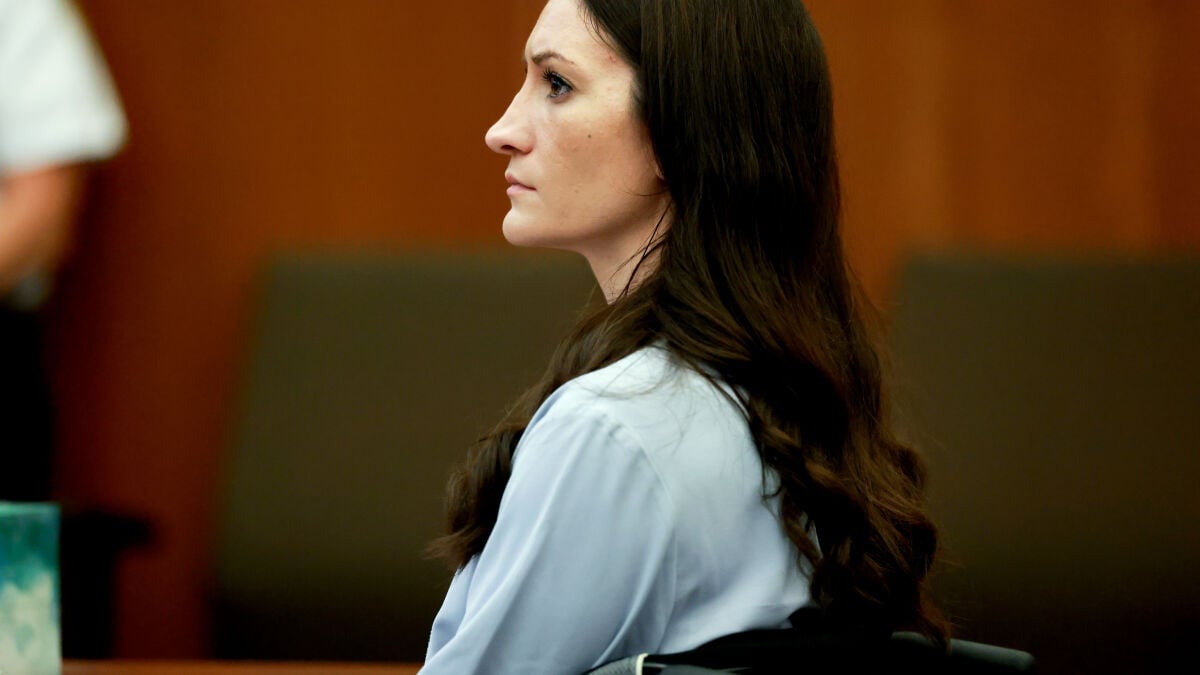
Most of this activity unfolds outside the courtroom, where it shapes public opinion without becoming part of the official case. But that boundary is now being tested in the trial of Lindsay Clancy, the Massachusetts mother charged with murdering her three young children in Jan. 2023.
Clancy’s defense acknowledges that she killed them but argues that she was suffering from postpartum psychosis and was not criminally responsible for her actions. Online, however, some viewers have rejected both sides’ accounts and begun conducting their own parallel investigation.
But it wasn’t one of their conspiracy theories that found its way into the legal proceedings. Instead, Clancy’s attorneys became interested in a video from Emily Thorndike that has amassed over 5 million views.
This Tweet is currently unavailable. It might be loading or has been removed.
The licensed independent clinical social worker had spent more than seven years working on the same short-term McLean Hospital unit where Clancy was later treated. Thorndike left McLean roughly a year before Clancy’s stay and had no firsthand knowledge of her treatment. After watching the trial, however, she posted a video challenging how prosecutors portrayed the hospital’s staffing, resources, and available care — particularly during weekends and holidays. She accused witnesses of spreading “lies and misrepresentations” about McLean.
On Aug. 11, Clancy’s defense asked the judge to add Thorndike to its witness list. The request flipped the familiar courtroom-to-TikTok pipeline on its head.
‘I hardly know what TikTok is’
Veteran defense attorney Kevin Reddington did not discover Thorndike while scrolling himself. According to his account during the Aug. 11 hearing, someone active in the trial’s TikTok community emailed him her video and urged him to watch it. “I hardly know what TikTok is,” Reddington acknowledged.
After watching the nine-minute, 58-second video, Reddington believed Thorndike’s experience could challenge the prosecution’s claim that Clancy had access to extensive treatment at McLean but chose not to fully participate in it.
This Tweet is currently unavailable. It might be loading or has been removed.
First, Reddington had to find Thorndike. Because her account did not use her full name, his office initially struggled to identify her. His private investigator, Bob Jones, called and left messages, then waited outside her home after she did not respond for three days. Thorndike later explained that she had assumed the outreach was fake: “I thought you guys were all AI!”
Once they connected, Reddington said that Thorndike agreed to testify about the staffing and programs she had observed during her time at McLean, including as a supervisor. But that experience came with a major limitation: She left in Dec. 2021 and could not speak to the conditions Clancy personally encountered a year later.
Prosecutors objected to the late notice, noting that Thorndike was not an expert witness and had watched the trial while publicly criticizing testimony. Assistant District Attorney Shanan Buckingham argued that her broader criticism of McLean might belong in the “court of public opinion,” but not “inside the walls of this courtroom.”
Judge William Sullivan agreed that Thorndike could not simply give jurors her personal rating of the hospital. “This is not TripAdvisor,” he said. Still, he called the narrower question of McLean’s holiday staffing and programming a “closer call.” He suggested that hospital records or someone who worked there during Clancy’s stay could provide the same information, and took the motion under advisement.
Whether or not Thorndike testifies, the episode makes one thing clear: Lawyers are no longer merely the subjects of true-crime TikTok…they’re watching it, too.
Mashable Trend Report
The Lindsay Clancy trial has become ‘forensic fandom’
Clancy, now 36, is charged with three counts of first-degree murder in the deaths of 5-year-old Cora, 3-year-old Dawson, and 8-month-old Callan. Prosecutors argue that she deliberately sent her ex-husband, Patrick Clancy, out of the house before carrying out a premeditated plan. Her defense says she was experiencing postpartum psychosis after being improperly treated with a rapidly changing combination of psychiatric medications.
On Aug. 17, prosecutors rested their case after calling dozens of witnesses over nearly four weeks. The defense then began presenting testimony about Clancy’s worsening mental health in the months before the killings.
Meanwhile, TikTok users have been conducting their own parallel trial. They have dissected courtroom footage, analyzed a disputed hot-mic moment, and even made thirst-trap edits of Reddington.
Others have promoted unsupported theories that Patrick killed the children and framed his then-wife.
This Tweet is currently unavailable. It might be loading or has been removed.
This Tweet is currently unavailable. It might be loading or has been removed.
This Tweet is currently unavailable. It might be loading or has been removed.
Videos have dissected his clothing, body language, and purported inconsistencies in his testimony, while creators have treated his subsequent remarriage and move to New York as suspicious. Some have even claimed that a body double appeared at CVS in his place or suggested that he deliberately created conditions that would make Lindsay appear psychotic. None of those theories is supported by investigators’ evidence. Patrick has not been charged, and prosecutors have not indicated that he played any role in the killings. CVS surveillance footage and phone records corroborate his account that he was at the store when the killings occurred.
Katy Coduto, an assistant professor of media science at Boston University, calls this sort of online behavior “forensic fandom“: People become so invested in a case that following it is no longer enough — they begin to believe they can solve it.
This Tweet is currently unavailable. It might be loading or has been removed.
This Tweet is currently unavailable. It might be loading or has been removed.
That feeling is encouraged by the sheer amount of material available. Court livestreams provide hours of footage to parse, while TikTok rewards creators for finding the supposedly overlooked clue or inconsistency that will transform the entire story.
What can true-crime fandom actually change?
Thorndike’s potential entry into the Clancy trial may be unusual, but she is hardly the first online figure to approach the boundary between following a case and becoming part of it. Just look at the Karen Read trials.
Aidan Kearney, the blogger known as Turtleboy, spent years arguing that Read had been framed in the death of her boyfriend, Boston police officer John O’Keefe. By 2026, he had published more than 550 blog posts in his “Canton Cover-Up” series, along with hundreds of livestreams accusing witnesses and law enforcement officials of participating in a conspiracy. His coverage and “Free Karen Read” rallies helped turn Read’s claim of innocence into a grassroots movement that spread across Massachusetts and beyond.
Kearney was then charged with witness intimidation over his alleged treatment of people connected to the investigation — charges he denied. A judge required him to leave the courtroom during testimony from certain witnesses. Prosecutors later received permission to examine his communications with Read as possible evidence. Kearney was also placed on a potential witness list and invoked his Fifth Amendment right against self-incrimination when questioned before Read’s second trial.
This Tweet is currently unavailable. It might be loading or has been removed.
Read was ultimately acquitted of second-degree murder and manslaughter in June 2025, though she was convicted of drunken driving. There’s no way to know how much the online movement influenced that outcome. But it undeniably changed everything surrounding the trial — including Kearney’s place in it.
High-profile trials have always been spectacles
Most creators don’t get quite that close to the action. More often, they act as an unofficial press corps for audiences following cases from their phones. During Sean “Diddy” Combs’ federal criminal trial, cameras were prohibited inside the courtroom, so TikTokers, YouTubers, and livestreamers stationed outside the courthouse stepped in with daily recaps of testimony and legal arguments. Some, including credentialed journalist Mona Kosar Abdi, reported directly from the courtroom and attracted millions of views. Their videos weren’t evidence, but for viewers following through social media, they became their version of the trial.
Online participation can sometimes produce something investigators can actually use. During the search for Gabby Petito in 2021, travel vloggers Jenn and Kyle Bethune reviewed footage from their road trip after seeing calls for information and spotted Petito’s van near Grand Teton National Park. They sent the footage to the FBI, helping investigators narrow the search area where her remains were found.
But online speculation can just as easily outrun the facts. After the remains of 14-year-old Celeste Rivas Hernandez were discovered in a Tesla parked in Los Angeles and registered to musician D4vd, whose legal name is David Burke, internet users combed through his digital history. They circulated photographs, purported social media posts, song lyrics, and images of a tattoo that appeared to connect Burke and Rivas, although much of the material had not been independently verified at the time.

Credit: TikTok’s “Top” results for a search of “D4vd”
Some of the material raised legitimate questions about their relationship; other users treated rumors and coincidences as proof. LAPD Chief Jim McDonnell later criticized some of the theories as wildly removed from investigators’ evidence. Burke was arrested in April 2026 and pleaded not guilty to first-degree murder and related charges. By then, though, online sleuths had already spent months shaping the public’s perception of his guilt and surfacing what appeared to be legitimate leads — and they continue to do so.
Sometimes, the target isn’t even a suspect. During the University of Idaho murder investigation, TikTok creator Ashley Guillard used tarot readings to accuse professor Rebecca Scofield of orchestrating the killings. Scofield had no connection to the crimes, but Guillard repeated the allegations across more than 100 videos, even after police cleared the professor and she received cease-and-desist letters. Scofield sued for defamation, and a jury awarded her $10 million in 2026 — years after the false claims had reached Guillard’s followers.
This Tweet is currently unavailable. It might be loading or has been removed.
Of course, renewed attention does not always work against a defendant. The Menendez brothers were already experiencing a TikTok revival when Netflix’s Monsters: The Lyle and Erik Menendez Story and a companion documentary brought the case back into the mainstream in fall 2024. The releases sent viewers searching for old trial clips and had some reconsidering whether the brothers’ sexual abuse allegations had been taken seriously in the 1990s. TikTok and Netflix did not legally reopen the case — their attorneys had filed a habeas petition based on purported new evidence in 2023 — but they gave that effort an enormous new audience.
This Tweet is currently unavailable. It might be loading or has been removed.
High-profile trials have always been spectacles — the Lindbergh kidnapping trial, Charles Manson, O.J. Simpson. What has changed is how easily the people watching can become active participants.
As Harvard Law professor Ron Sullivan warned in 2025, constant coverage gives jurors more opportunities to encounter inadmissible evidence and arguments. But the influence runs both ways: Attorneys can find witnesses through TikTok, prosecutors can subpoena creators’ messages as evidence, and online movements can pressure officials to reopen cases — even as unfounded theories harm victims, their families, and witnesses.
Courts still decide what becomes evidence, but they can no longer pretend the parallel proceedings unfolding online don’t affect them. Reddington may barely know what TikTok is, but the legal system no longer has that luxury.
Topics
Social Media
True Crime