
BIP-110 Supporters Prepare PoW Switch If Miners Refuse Soft Fork Plan
Key Takeaways
- Chris Guida rebased 2017 PoW fork code as BIP-110’s Aug. 8-9 window nears.
- BIP-110’s 55% threshold tests whether Bitcoin nodes can overcome miner resistance.
- Start9 closed Lightning channels before block 961632 as split risks grew
The code is not yet scheduled for activation, and Guida has described it as a last-resort contingency rather than an imminent fork. The codebase public release still raises the stakes around BIP-110, a proposed temporary soft fork that would restrict how much nonfinancial data can be embedded in bitcoin transactions and could place enforcing nodes on a separate chain if miners refuse to cooperate.
Guida Revives Bitcoin’s Nuclear Option
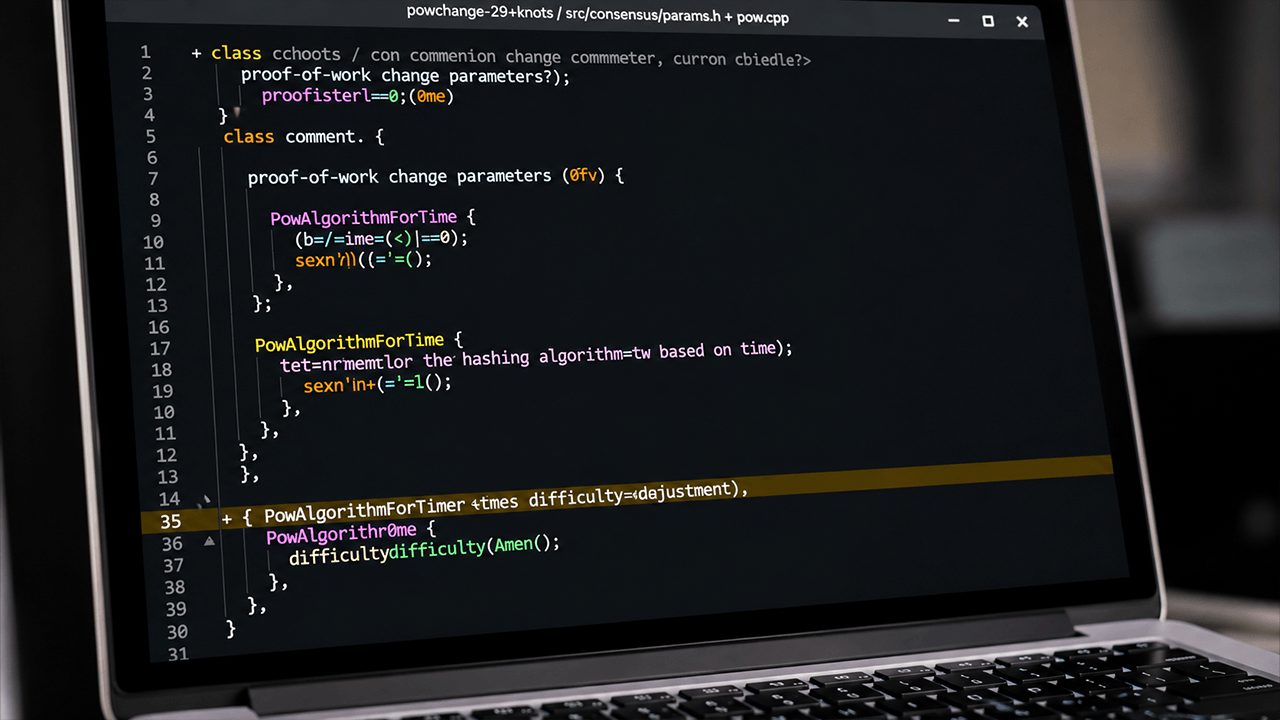
Guida rebased proof-of-work change code written by Bitcoin developer Luke Dashjr in 2017 onto a recent Bitcoin Knots codebase. The public branch updates the older concept for modern software and includes changes to mining validation, consensus settings, block handling, chain parameters and functional tests. On Aug. 4, Guida told the public that the code is being kept “in our back pocket” in case miners block or stall BIP-110.
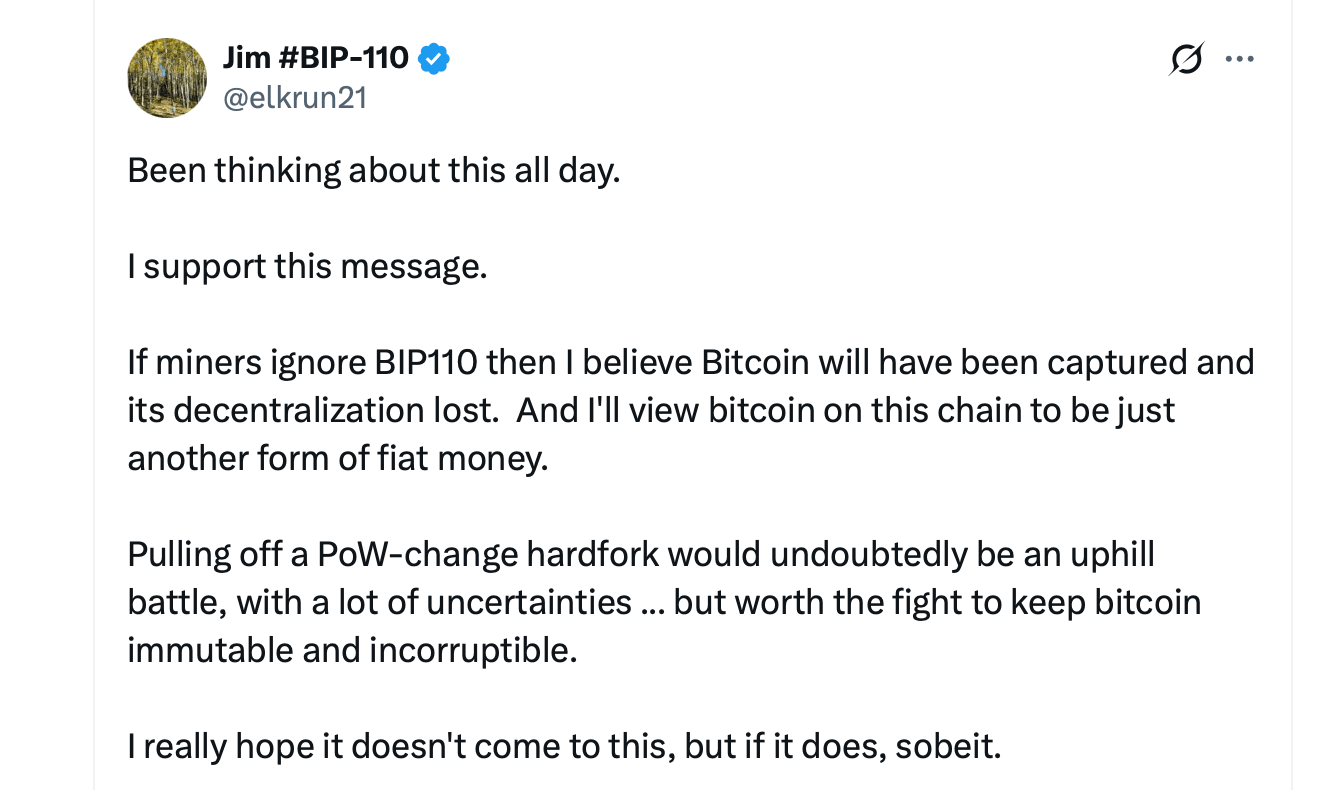
“People seem to think that the intention is for this pow change to activate immediately,” the developer wrote. “That’s not the case This is just some code to have in our back pocket in case miners betray bitcoin, to activate at some point later.”
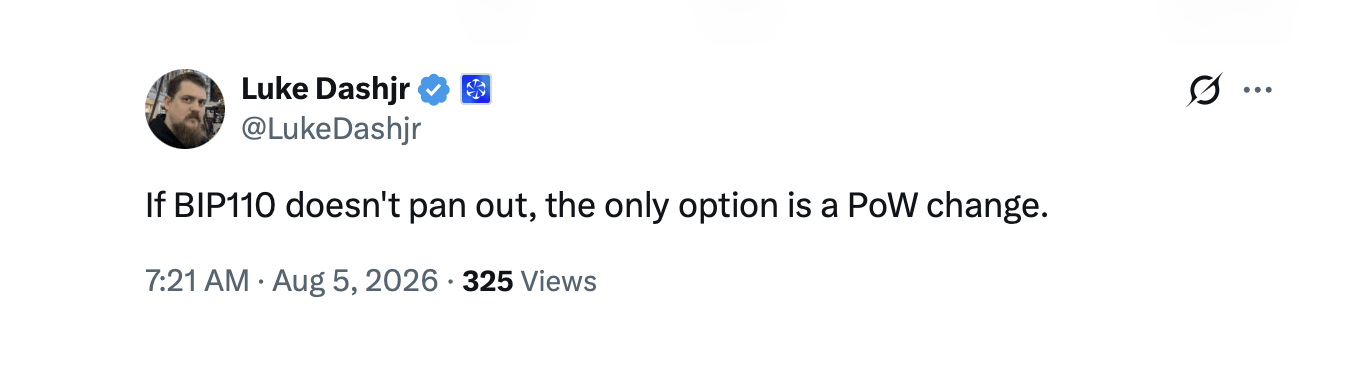
The purpose is to give BIP-110 supporters an escape route from the computing power controlled by existing miners. A new proof-of-work (PoW) algorithm would prevent today’s specialized bitcoin mining machines from immediately dominating the breakaway chain. Guida has said he expects miners to support a smooth BIP-110 activation, while Dashjr has doubled down by saying “Core is the scamcoin,” making clear he sees the fight as far from over.
Ordinals Keep Flowing While Bitcoin’s Biggest Players Stay Quiet
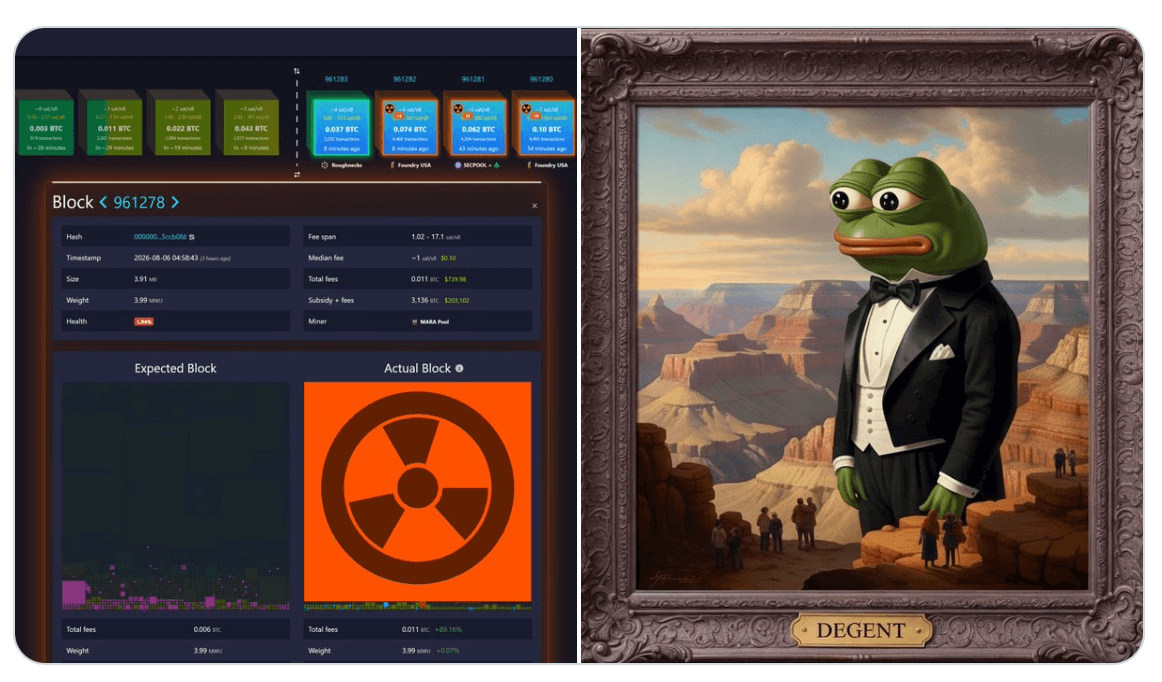
Those backing Ordinals, Runes and other arbitrary blockchain data are making their position unmistakably clear just before mandatory signaling begins. At block height 961278, MARA Pool mined a block containing only two transactions, one of which embedded a vintage-style Pepe the Frog image. “Really MARA?” one user wrote. “3.85 MB space for this? People using Slipstream for this…..”
Across Bitcoin’s infrastructure, contingency planning for BIP-110 has been strikingly quiet. Major mining pools including MARA Pool, Antpool, F2Pool, ViaBTC and others have revealed little, while support has largely come from smaller operators such as SoV, Roughnecks and Sympatheia. Exchanges and custodians remain mostly silent. Bitcoin.com News previously reported that Australian bitcoin platforms Bitaroo and Hardblock are among the few to publicly outline contingency plans.
BIP-110 Forces Miners Toward a Deadline
BIP-110, formally called the Reduced Data Temporary Softfork, would tighten Bitcoin’s rules on arbitrary data for roughly one year. It would limit certain contiguous data, reduce permitted script sizes and restore an 83-byte consensus limit for OP_RETURN, a transaction field that can be used to attach data. Supporters say the restrictions would return the base layer’s focus to financial activity and reduce legal or operational risks for node operators.
The proposal requires 55% miner signaling, or 1,109 of 2,016 blocks, for an early lock-in. If that threshold is not reached, a mandatory signaling window begins at block 961,632, projected to happen this weekend on or around Aug. 8 or 9. Nodes enforcing BIP-110 would then reject blocks that do not signal support, with lock-in expected no later than block 963,648 and activation targeted around block 965664.
Voluntary signaling has remained low, even as Bitcoin Knots adoption has appeared higher among reachable nodes. That gap matters because miners provide the computing power that advances the chain, while nodes independently decide which blocks and rules they accept. When miners and a meaningful group of nodes follow incompatible rules, Bitcoin can divide into competing histories, ultimately leaving businesses and users to decide which chain they recognize.
A PoW Switch Would Strand Today’s ASICs
Bitcoin currently uses double SHA-256, known as SHA-256d, as its PoW algorithm. Specialized machines called application-specific integrated circuits, or ASICs, perform that calculation far more efficiently than ordinary computers and account for nearly all modern bitcoin mining. Changing the algorithm would make those machines ineffective on the new chain unless developers selected a compatible replacement.
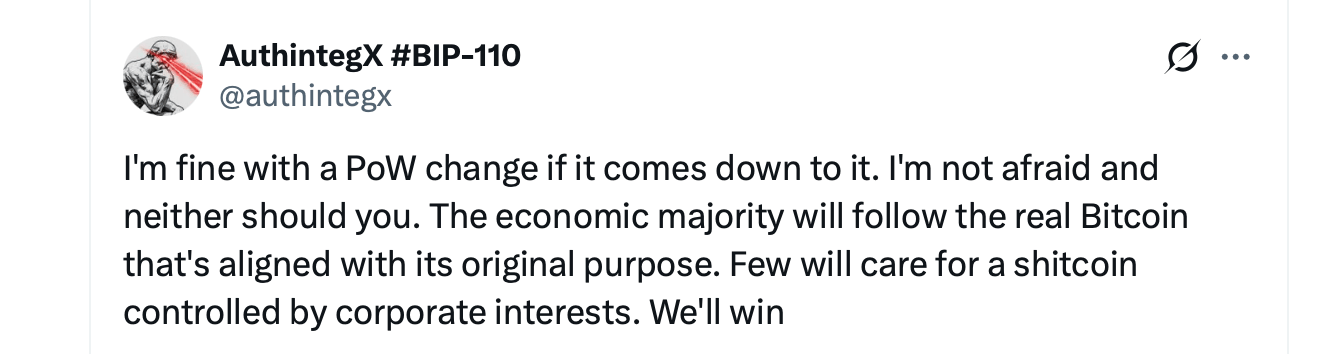
Guida’s code allows a future hard fork to switch algorithms after a configurable time. The available options include SHA-256, SHA-256d, RIPEMD-160 and HASH160, although the mainnet setting leaves the fork unscheduled by default. Any actual launch would require developers and users to agree on an algorithm, activation time, software release and coordination plan. No such schedule currently exists.
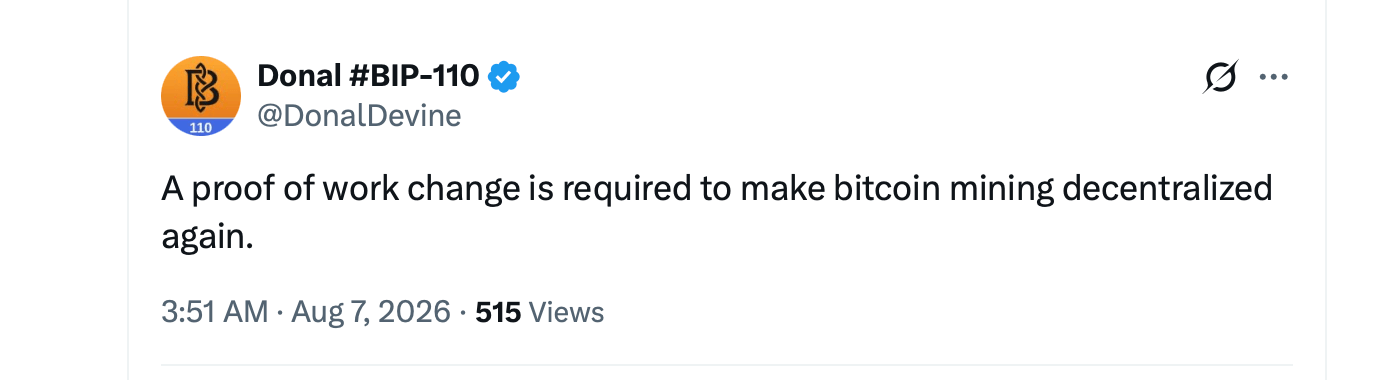
The first block under the replacement algorithm would receive a mining target roughly 1 million times easier under the default setting. That reset is intended to help a chain with little initial computing power produce blocks instead of freezing. Normal difficulty rules would then resume. Supporters see the mechanism as leverage against miners, while critics say it could destroy mining investment, fragment liquidity and create a minority cryptocurrency with weak infrastructure support.
Lightning Operators Move to Limit Fork Exposure
A proof-of-work fork would create complications far beyond mining. Start9 has warned that Lightning Network channels opened before a split may be difficult to recover or migrate because their pre-signed transactions, time locks and penalty rules were built around a shared chain history. A slowly advancing or reorganized chain could leave channel balances stranded or expose users to disputes involving older channel states.
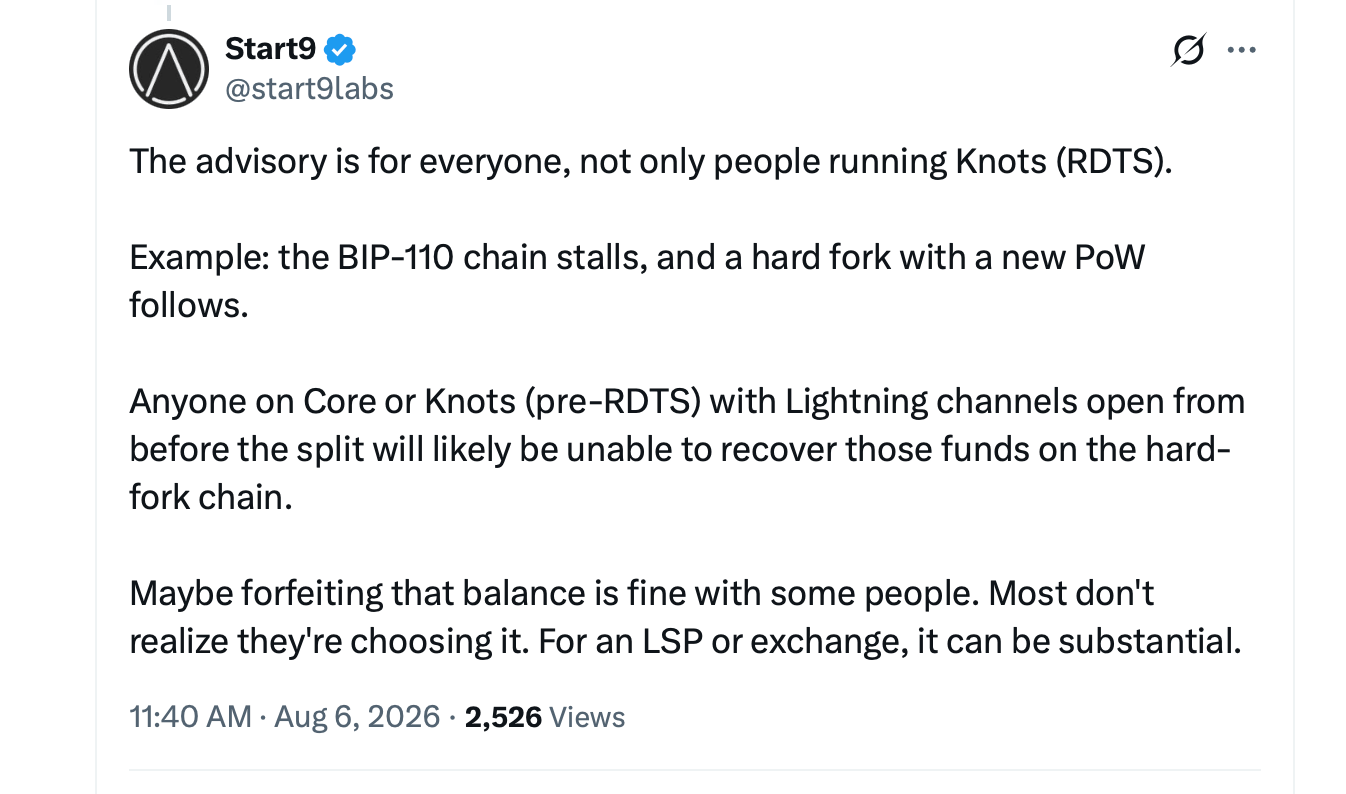
Start9 advised users to consider cooperative channel closures before the mandatory signaling window and said it closed its own company node channels as a precaution. Closing a Lightning Network channel normally returns funds to regular onchain outputs controlled by the user’s keys. Exchanges, custodians and payment services would face separate decisions about deposits, withdrawals, confirmation requirements and replay protection, which prevents a transaction on one chain from being copied onto the other.
Bitcoin’s Next Battle Tests Who Sets the Rules
The dispute revives arguments from Bitcoin’s 2017 block-size fight, when users promoted software enforcement (User Activated Soft Fork-UASF) as a check on miner power. BIP-110 supporters say economic nodes define Bitcoin’s rules and should be able to reject miners that refuse them. Opponents believe that the activation design is aggressive and that miners following the existing consensus are not attacking the network.
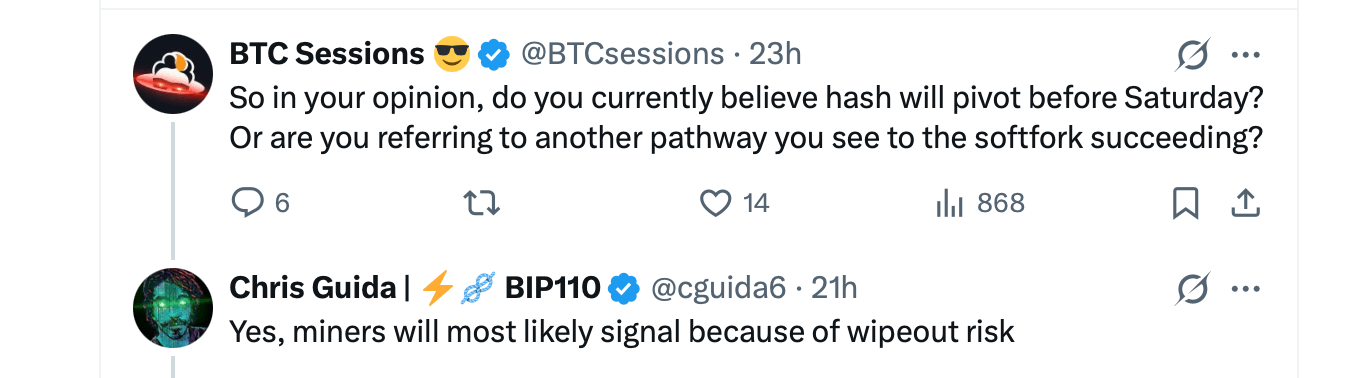
For now, Guida’s proof-of-work branch remains an unused contingency. The immediate test is whether bitcoin miners change their signaling behavior during the mandatory window and whether enforcing nodes remain on a viable chain. The next signals to watch are official Bitcoin Knots releases, miner support, Lightning channel closures, exchange policies and any move to give the hard-fork code a specific algorithm or activation date.
At the time of writing, chain tip 961425 at 8:15 a.m. EDT on Friday, Aug. 7, 2026, only 207 blocks remain before the mandate begins at block 961632. The numbers tell the story. Just 47 of 1,818 blocks have signaled BIP-110 support, leaving the current signaling rate stuck at roughly 2.59%.