Latest Timeline, Patents, and Challenges
Apple Watch blood sugar tracking has become one of the most anticipated features in wearable tech… but it remains stuck between promising research and medical reality.
Apple has not announced an Apple Watch that can measure blood glucose on its own, and the US Food and Drug Administration says no smartwatch or smart ring has been cleared, authorized, or approved to measure or estimate blood glucose without piercing the skin.
Still, reports, patent activity, and Apple’s broader health strategy have kept speculation alive around whether a future Apple Watch could someday help users monitor glucose noninvasively.
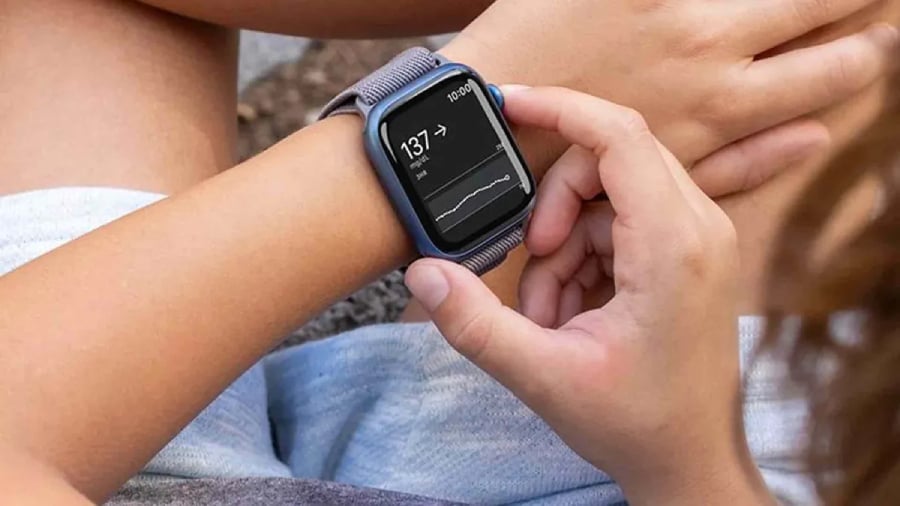
For now, the practical answer is simple: the Apple Watch can display glucose data from compatible continuous glucose monitors, but it cannot measure blood sugar on its own.
Apple Watch blood sugar tracking timeline
Apple has spent years building the Apple Watch into a health and wellness device, adding features such as heart rate notifications, ECG, blood oxygen monitoring, wrist temperature sensing, sleep tracking, and cycle tracking.
Blood sugar tracking would be a much bigger leap.
Unlike heart rate or step tracking, glucose data can directly influence medication, diet, exercise, and emergency decisions for people with diabetes. That means any native Apple Watch glucose feature would likely need substantial clinical validation and regulatory review before launch.
Bloomberg has reported that Apple has spent years working on noninvasive glucose monitoring, including a system that uses silicon photonics and optical absorption spectroscopy to measure glucose-related signals beneath the skin. But Apple has not announced a release window, and there is no official indication that blood sugar tracking will appear in the next Apple Watch.
What Apple Watch can do today
Apple Watch can show glucose readings when connected to a compatible continuous glucose monitor.
Dexcom says its G7 Direct to Apple Watch feature lets a Dexcom G7 sensor connect directly to Apple Watch through Bluetooth after setup. That allows users to view CGM data on the watch without carrying an iPhone nearby.
That is useful, especially for people who already use a CGM. But the glucose reading still comes from the Dexcom sensor, not the Apple Watch.
What Apple’s patent activity may reveal
Apple’s patent activity around wearable health sensing suggests the company has explored advanced health sensing, but patents should not be treated as a product roadmap.
Bloomberg has reported that Apple’s long-running glucose work has involved optical absorption spectroscopy and silicon photonics, technologies that could theoretically help measure glucose-related signals through the skin. But Apple has not confirmed that this work will appear in Apple Watch, and a patent or patent application does not mean a feature is accurate, approved, or close to launch.
That distinction matters. Large technology companies routinely patent ideas that never become consumer products, and glucose tracking would face a much higher bar than a typical smartwatch feature.
For Apple, the challenge is not only detecting a glucose-related signal. The harder task is proving that any reading is reliable enough for real-world use across different bodies, skin tones, environments, and health conditions.
That is especially important because glucose tracking is not just another wellness chart. The FDA has warned that inaccurate smartwatch or smart ring glucose readings could lead someone to take the wrong dose of medication and make a dangerous treatment decision.
Must-read Apple coverage
Why noninvasive glucose monitoring is so difficult
The dream version is easy to understand: a watch shines light into the skin, reads a signal, and estimates blood sugar without needles.
The reality is messier.
Research on noninvasive glucose monitoring has found that optical approaches must overcome problems such as weak glucose signals, interference from other tissue components, motion, temperature, skin differences, and calibration challenges. A wrist-worn device must also deal with sweat, sensor placement, hydration, and normal day-to-day biological variation. Even small inaccuracies can matter when users rely on glucose data to make decisions about food, exercise, or medication.
The FDA warned in 2024 that smartwatches and smart rings claiming to measure glucose without piercing the skin could provide inaccurate readings. The agency said incorrect glucose measurements could lead users to take the wrong dose of insulin or other medication, potentially causing serious harm.
Why Apple may move carefully
Apple has already seen how complicated medical-style wearable features can become.
Its blood oxygen feature became tied up in a patent dispute with Masimo, forcing Apple to disable the feature on certain US Apple Watch models before later rolling out a redesigned Blood Oxygen experience that calculates and displays results on the paired iPhone. That does not directly determine Apple’s glucose plans, but it shows how health sensors can create technical, regulatory, and legal complications beyond normal consumer electronics updates.
Glucose tracking would likely draw even more scrutiny because of the direct connection to diabetes management.
If Apple eventually launches a glucose-related feature, it may begin as a wellness or trend-tracking tool rather than a full medical glucose monitor. The wording will matter: “glucose insights,” “metabolic trends,” or “risk indicators” would mean something very different from an FDA-cleared glucose monitoring device.
What to watch next
The strongest signal will not be another rumor. It will be regulatory evidence.
Watch for FDA filings, clinical studies, peer-reviewed data, or explicit language from Apple about whether a glucose feature is intended for wellness tracking or medical use.
Until then, users should be skeptical of any smartwatch or ring that claims to measure blood sugar without a sensor under the skin. People who need accurate glucose data should use an FDA-authorized blood glucose meter or continuous glucose monitor and follow medical guidance.
Bottom line
Apple Watch blood sugar tracking is one of the most compelling possibilities in wearable health tech, but it is not here yet.
Today, Apple Watch can display glucose data from supported CGMs. It cannot measure blood glucose on its own. If Apple eventually solves noninvasive glucose monitoring, it could be a major health-tech milestone. For now, the gap between patents and a safe, approved product is still the story.
Related reading: Want to see how Apple’s efforts compare with today’s wearables? Check out our breakdown of smartwatch blood sugar tracking across Apple, Samsung, Garmin, and Oura.