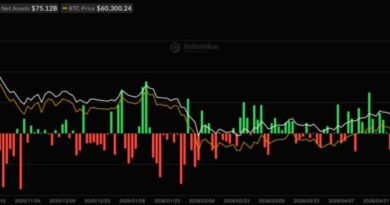

Binance bStocks push heats up after $143M equities debut

Binance’s U.S. equities product averaged about $143 million in daily trading volume during its first nine days, according to CoinDesk Research.
Summary
- Binance’s equities product averaged $143 million daily volume during its first nine trading days.
- Tokenized stock markets remain smaller, with CoinGecko showing about $1.16 billion in total market value.
- bStocks gives Binance a tokenized layer as U.S. equity demand grows on crypto rails now.
That level was more than three times the tokenized equities spot market’s peak weekday volume of about $35 million to $40 million.
The product went live on June 1 for eligible users outside the United States. It gives access to more than 7,000 U.S. stocks and ETFs, with fractional trading, zero commission and funding through supported crypto assets.
CoinDesk Research said turnover passed $1 billion in nine days. Daily active traders peaked at 30,700, while total value locked stood near $400 million. The early numbers show that Binance entered the equity access market with scale from launch.
Tokenized equity market faces a larger rival
CoinGecko data showed the tokenized stock category had a market cap of about $1.16 billion and 24-hour trading volume near $1.47 billion. The category covers blockchain-based versions of stocks across products from issuers such as Ondo and Backed.
The first generation of tokenized equities proved user demand but faced limits. It said the market has more than 200 issued tokens, but only about 40 trade with meaningful activity. The report also said much of the volume sits on smaller trading venues.
The comparison matters because Binance now offers both real shares and tokenized stocks. Its real-share product focuses on access through a regulated broker-dealer model. Its bStocks product targets users who want a tokenized layer that can move on-chain.
bStocks expands Binance’s crypto rails strategy
As crypto.news reported, Binance launched bStocks with 24/7 trading for tokenized U.S. equities. The first batch included tokenized versions of Nvidia, Tesla, Circle, Micron and Sandisk. Binance said the tokens are backed 1:1 by the underlying securities.
The company also said eligible users can convert supported equity holdings into bStocks. Those assets can trade on Binance’s spot market, move to supported self-custody wallets and be used in approved DeFi applications.
Moreover, as earlier reported, Binance’s stock trading feature lets non-U.S. users buy more than 7,000 U.S. stocks and ETFs. Users can buy fractional shares from $5 with assets such as USDT, USDC, BNB and selected cryptocurrencies.
Demand also moves into equity perpetuals
Demand is not limited to spot products. Equity-linked perpetuals increased their share of traditional finance-linked perpetual volume from about 10% at the start of May to roughly 40% by month-end.
That trend shows traders are using several tools to seek U.S. equity exposure on crypto rails. Spot tokens, perpetuals, real shares and bStocks all serve related demand, though each product works differently.
Additionally, as reported earlier this month, Binance Research sees crypto exchanges as a possible route for 300 million new equity investors by 2031. That report pointed to emerging markets, stablecoin settlement and lower access costs as reasons for the push.
For Binance, the next test is whether early volume turns into steady use. The platform already has distribution, broker-dealer access and a tokenized layer. The contest now centers on whether users prefer direct stock exposure, tokenized equities or both inside one crypto account.
Regulatory access, depth and user trust will decide how far that model can grow.