The New Era of Militia Influencers
Just over a week into the US and Israel’s war with Iran, Eric Roscher, an Air Force veteran, published a YouTube video on what he describes as the “very real concerns surrounding sleeper cells and terrorist threats” in the US.
The video, titled “Credible DOMESTIC Threat? FBI warns of attack—Drills/Considerations for the Prepared Citizen,” was produced by Roscher’s Florida-based company Barrel and Hatchet, which runs military-style training, sells branded merchandise and tactical gear, and produces online content. In the video, Roscher and his associates advise viewers to carry “extra mags” and “that truck gun,” while keeping “your head on a swivel.” Toward the end of the post, Roscher shows off a tactical vest that’s on sale from one of the video’s sponsors.
The video, which is part of YouTube’s monetization program and has a total of eight ads, has been viewed over 110,000 times. (YouTube did not respond to a request for comment.)
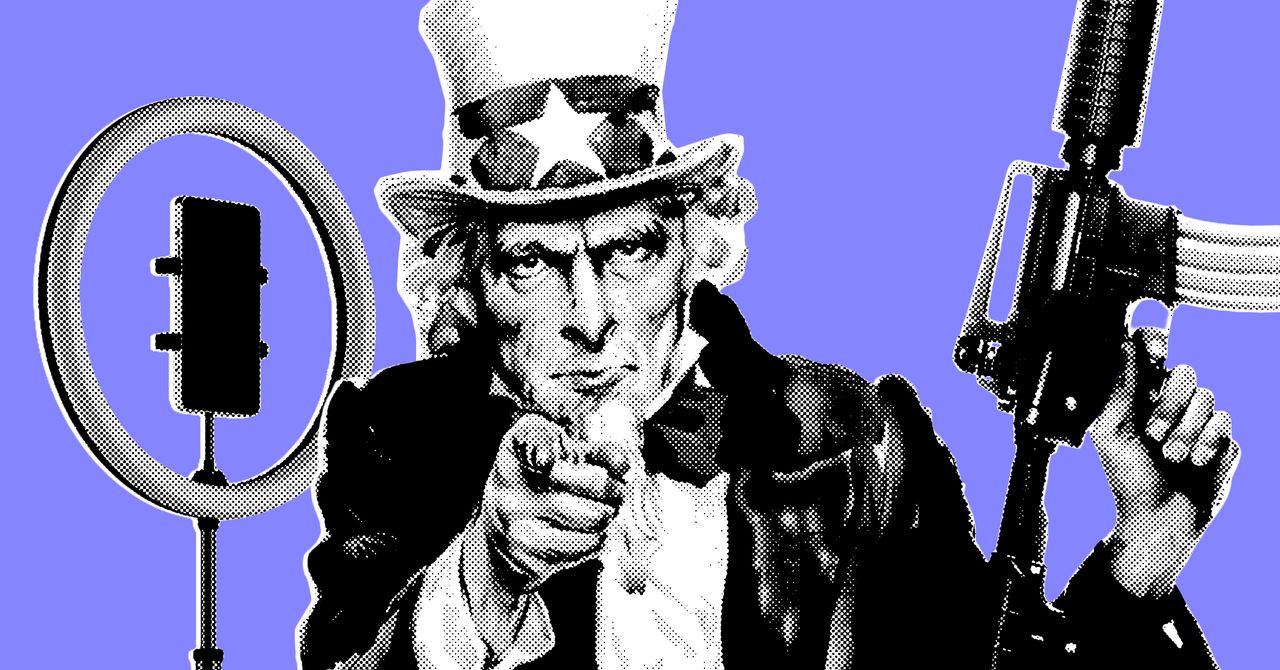
Barrel and Hatchet is not a militia, but the company and Roscher are part of a broader rebranding of the entire militia movement in the US, one that is focused less on showing up at drag queen story hours and more on expensive weapons, manly sweatshirts, and highly curated Instagram grids.
Influencers like Roscher produce slickly edited content that is then shared widely among militia groups on platforms like Instagram, in an effort to promote not only their ideology but also, crucially, links to their online stores and training sessions. In turn, those same militias emulate Roscher by posting their own videos and images of weekend training sessions in the woods, close-ups of their camo gear and rifles, and slo-mo footage of live firing drills. The give-and-take between these groups, and the influencers and military members they seek to emulate, marks a new era of American militias, where gaining followers and earning clout on social media is as important as being able to hit a target from 300 yards.
Roscher and these modern militia groups, with names like River Valley Minutemen and Mountain State Contingency Group, have positioned themselves as emergency response organizations working to help their communities and prepare citizens to “weather the storm”—whatever, or wherever, that may be. They use real-world events like the Iran war and ICE attacks on immigrant communities to spread fear, leveraging that fear to recruit new members.
These influencers are filling a gap in the US militia landscape, which has changed dramatically in recent years. With the Oath Keepers and Proud Boys largely disbanded in the wake of prosecutions over the January 6 attack on the Capitol, these influencers and groups have filled the vacuum, resulting in a decentralized network of local groups and people who support or emulate the previous movement—albeit in smaller, local ways.
“What used to be a national movement, with groups like Oath Keepers and Three Percenters, has really gone back to their local and regional roots,” says Travis McAdam, a senior analyst with the Southern Poverty Law Center (SPLC) who tracks militias and anti-government groups. “A lot of them have really tried to reframe themselves as auxiliary emergency preparedness groups and have done quite a bit to reform their reputation post-January 6, portraying themselves as ‘oh, we’re just here to help the community.’”
This is a new era of militia recruitment and influence—and it’s all happening in social feeds near you.
The Militia Business
Dirty Civilian is a Tennessee-based group of influencers that describes itself as “prepared citizens inspiring and informing capable men to build strong families and resilient communities” in order “to weather the storms ahead.” The group doesn’t specify what those storms are, but in one YouTube video published on Sunday, Dirty Civilian outlined a scenario where a group of vigilantes take it upon themselves to assassinate someone they believe is a pedophile. The Dirty Civilian channel has almost 750,000 subscribers, and the video, which is monetized, racked up over 100,000 views on YouTube in its first 24 hours. Multiple militia groups reposted the video on Instagram.
“It’s almost like a tutorial or something,” one commenter wrote under the video. “Food for thought at least.” Another commenter, using the acronym for minor-attracted person, a term some online communities use to refer to pedophiles, wrote: “A show that could inspire the targeting of MAPs? FANTASTIC.”